
Introduction
Most people have a story about a vacuum cleaner that was more trouble than it was worth: a cord that never reaches the far corner, a bulky body that refuses to fit through a narrow doorway, or a dust bin that fills up halfway through the living room. These frustrations explain why cordless stick vacuums have become one of the most searched categories in home cleaning.
The idea behind a cordless vacuum is simple. Replace the power cord with a rechargeable battery, slim down the body, and make the whole machine easy to pick up and put down. For homes with pets, mixed flooring, stairs, or limited storage, that shift in design can change how often and how willingly people clean.
Still, the category is crowded, and product titles are often packed with numbers and technical terms that are hard to interpret. Watts, kilopascals, minutes of runtime, and screen displays all sound impressive, but they say little unless someone explains what they mean in daily use.
This guide takes a closer look at a cordless stick vacuum described with a 650W motor, 55KPA suction, up to 70 minutes of runtime, a self-standing feature, a touch screen, and an anti-tangle design. The aim is to explain what these terms generally mean, who this kind of machine may suit, and what a careful buyer might want to weigh before deciding. Nothing here is meant to pressure a purchase. It is a reading resource for people who prefer to understand a product category before committing to it.
Product Overview
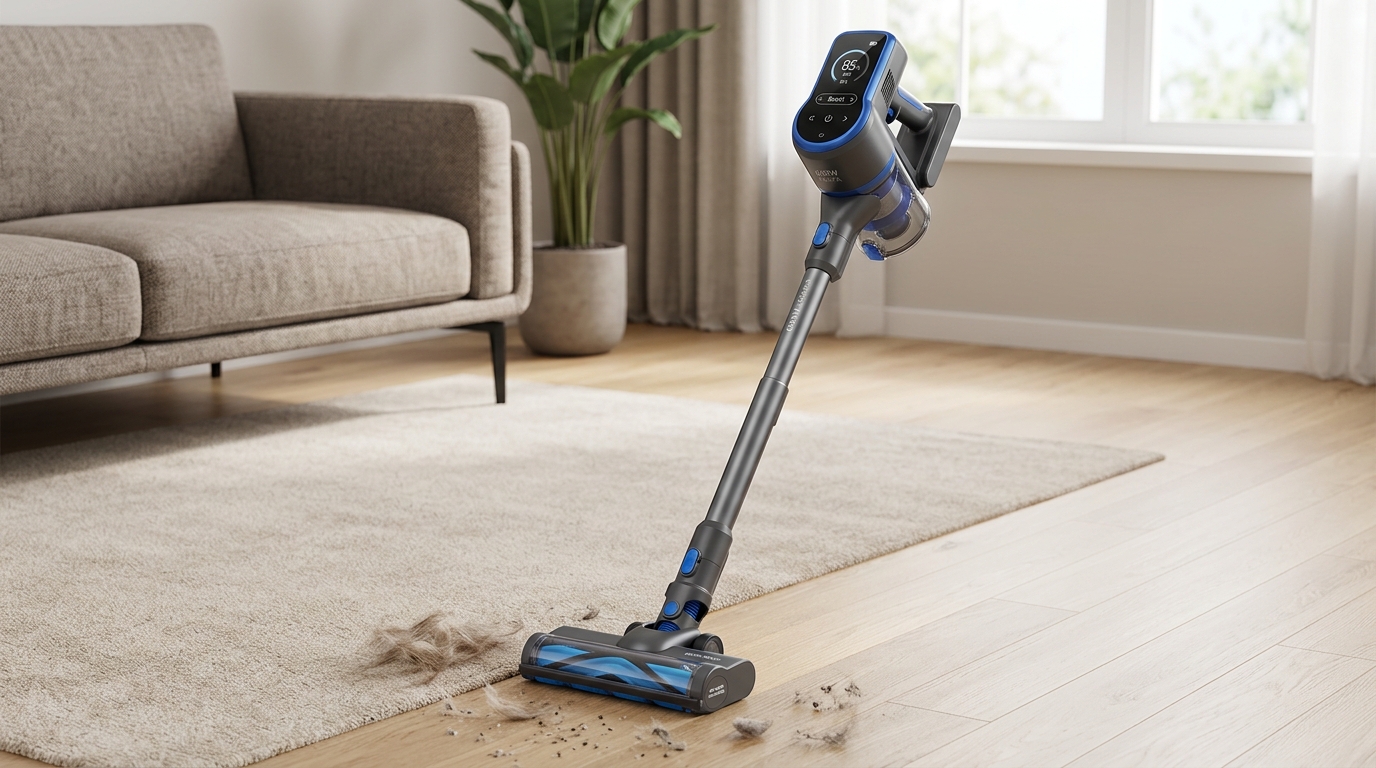
This product is a cordless stick vacuum cleaner marketed for use on floors, carpets, and pet hair. A stick vacuum has a tall, narrow shape. The motor and dust bin sit near the top or middle of the body, a long wand leads down to the cleaning head, and the user holds a handle at the top. There is no cord to plug in during use, because the machine runs on a rechargeable battery.
The listing title describes several traits that set it apart from very basic models:
- A stated motor power of 650 watts
- A stated suction rating of 55 kilopascals
- A stated runtime of up to 70 minutes
- A self-standing design, meaning the vacuum is intended to remain upright without being leaned on a wall
- A touch screen for viewing or adjusting settings
- An anti-tangle feature aimed at reducing hair wrapping around the brush
Put together, these traits point to a machine built for people who want a cord-free option with more features than a simple entry-level stick vacuum. The general purpose is everyday household cleaning: picking up dust, crumbs, pet hair, and light debris from a variety of surfaces without the hassle of a cord.
It helps to remember that numbers in a product title are figures supplied by the seller or manufacturer. They describe design specifications under particular conditions, not guaranteed outcomes in every home. Readers who want the exact, current specifications should confirm them on the official listing.
Who This Type of Vacuum Is Designed For
Feature-rich cordless stick vacuums are often considered by:
- Pet owners who deal with regular shedding on floors and rugs
- People in apartments, townhouses, or multi-level homes
- Households with a mix of hard flooring and carpets
- Anyone who prefers short, frequent clean-ups to long weekend sessions
- Buyers who like to see clear information about battery and power settings on a display
Whether it truly fits depends on the size of the home, the type of flooring, and personal habits.
Key Features
Product titles often bundle many technical terms together. Below, each main feature is explained in plain language, along with the kind of practical value it may offer.
Cordless Design
Removing the cord changes how a vacuum is used. There is no need to search for an outlet, unplug when changing rooms, or worry about the cord catching on furniture. A battery-powered machine is designed to let the user walk freely through the home, climb stairs, and clean under beds without interruption.
The trade-off is that everything now depends on the battery. Charging, capacity, and aging all become part of the ownership experience.
The 650W Motor Rating
Watts describe the electrical power a motor draws or is rated for. A figure like 650W suggests a fairly strong motor for a household stick vacuum. Even so, wattage alone does not tell the whole story. Real cleaning ability is shaped by airflow design, the shape of the cleaning head, the seal between components, and the condition of the filter. Two machines with the same wattage can behave very differently.
A useful way to read the number is as an indication of the intended power class, not as a direct measure of results.
The 55KPA Suction Figure
Kilopascals, abbreviated KPA, are a unit used to describe suction pressure. A higher figure generally suggests a stronger pull under laboratory-style conditions. Many people look for this number when shopping because suction is one of the first things they associate with vacuum quality.
However, suction is only one part of cleaning performance. The brush roll, head design, floor type, and how full the dust bin is all contribute. Also, ratings can be measured in different ways by different companies, so comparing figures across brands is not always straightforward. Treat the 55KPA number as a helpful indicator, but not as a promise of any specific cleaning result.
Up to 70 Minutes of Runtime
The title mentions a runtime of up to 70 minutes. This is a long stated figure for a cordless stick vacuum and may appeal to people with larger homes or those who prefer to clean everything in a single session.
Runtime figures like this are typically measured at the lowest power setting without a motorized brush attachment running at full effort. Using stronger modes, cleaning thick carpet, or running the motorized head continuously will usually shorten the available time. A sensible approach is to view the number as a maximum under favorable conditions and to expect shorter sessions in demanding modes.
Self-Standing Feature
Many cordless stick vacuums have to be leaned against a wall or placed on a charging dock when not in use. A self-standing design is intended to let the machine remain upright by itself. This can be handy when pausing mid-clean to move a chair, answer the door, or empty the bin. It also makes it easier to store the machine in a corner without needing a wall mount.
Stability can vary from design to design, so it may be worth checking how the machine behaves on different floor surfaces.
Touch Screen
A touch screen is a less common addition for vacuum cleaners in this category. It is generally used to show information such as the selected power mode, remaining battery level, or maintenance alerts, and may also allow adjustments through touch controls. For some people, a visible display makes it easier to understand what the machine is doing and to plan a cleaning session around the remaining battery.
Others may prefer simple buttons, since fewer electronic parts can mean fewer things that might need attention. This is a matter of personal taste.
Anti-Tangle Design
Hair, especially long human hair and pet fur, tends to wrap around a rotating brush roll. An anti-tangle design is intended to reduce this problem, often through the shape or arrangement of the brush bristles or a comb-like element that helps separate hair from the roller. The result may be less time spent cutting tangles away by hand.
It is worth being realistic. No design removes the need for occasional brush maintenance, especially in homes with long-haired pets or people. But a well-planned brush can make that upkeep quicker.
Multi-Surface Cleaning
The title suggests use on floors, carpets, and pet hair. Cordless stick vacuums typically include a motorized brush head that adapts to different surfaces. Some models offer adjustable power modes so the user can reduce suction on hard floors and increase it on carpets. Readers who have several flooring types may want to check how the machine handles the transition from one surface to another.
Bagless Collection and Filtration
Most vacuums of this type collect debris in a removable bin instead of a disposable bag. This can reduce ongoing costs and let the user see when the bin needs emptying. Filters inside the machine are designed to hold fine particles so they remain in the vacuum. Some are washable, while others need replacement after a period of use. The manufacturer’s manual is the best source for specific guidance.
Materials and Design
Cordless stick vacuums are commonly built from molded plastic housings, with metal or reinforced parts in areas that face more stress, such as wand connections and joints. Plastic helps control weight, which is a top priority for a machine that users will be holding and lifting.
Build and Structure
A slim vertical body is designed to move easily around furniture legs and into tight spaces. When judging build quality in general, several small details matter more than headline numbers. These include how securely the dust bin clicks into place, how firmly the wand locks together, whether the handle feels comfortable, and whether the buttons or screen respond smoothly.
Because this model includes a display, it also has more electronic components than a basic stick vacuum. That may add convenience, but it is one more element to consider when thinking about long-term care.
Weight and Balance
A vacuum with a larger battery can weigh more than a compact one. The stated runtime of 70 minutes suggests a substantial battery pack, so readers who are sensitive to weight may want to look up the listed weight and think about how it would feel during a full cleaning session. Balance also matters: a machine with weight concentrated near the handle often feels different from one with weight closer to the floor.
Appearance
Modern cordless vacuums usually favor clean lines and modest color accents. Appearance is largely subjective, but a self-standing machine may be stored in more visible places, such as the corner of a living room, which makes design a slightly bigger consideration.
Battery and Charging
Rechargeable lithium-ion batteries are the standard in this category. They are designed to deliver steady power until nearly empty, then must be recharged. Over the years, capacity gradually declines, which is normal for all rechargeable batteries. Habits such as avoiding extreme heat, not leaving the battery fully drained for long periods, and following the charging guidelines in the manual may help it age more gracefully.
Charging time varies by design. Readers who need the machine ready quickly should look at the stated charging duration before choosing.
Performance
When talking about performance, it is important to describe design intent rather than promise measured outcomes. This article is not based on hands-on testing, and the following should be read as an explanation of what the product is intended to do.
What the Vacuum Is Designed to Do
This vacuum is designed to pick up everyday household debris, including dust, crumbs, pet hair, and small particles, from hard floors, low to medium carpets, and nearby surfaces. The combination of a strong motor rating, a motorized brush, and an anti-tangle approach suggests it is aimed at households that want a capable cordless option for regular use.
Factors That Influence Real-World Results
Results from any vacuum depend on the conditions in which it is used. Some of the main variables include:
- Floor type: Tile, laminate, low-pile carpet, and thick rugs each respond differently.
- Type of debris: Fine dust, sand, cereal, litter, and long hair each behave differently.
- Power mode: Higher modes generally improve pick-up on carpet but reduce battery time.
- Bin and filter condition: A full bin or clogged filter can reduce airflow.
- Brush condition: Tangled hair may slow the roller and affect performance.
- Technique: Slow, overlapping passes often lead to more thorough cleaning than quick ones.
Because of these factors, it is common for two households to describe the same model very differently. That is why matching a product’s design to your own situation is usually more useful than relying on a single number.
Noise and Handling
Motor-driven cleaning creates noise, and higher power modes tend to be louder. People who live with noise-sensitive pets or small children may want to consider this. Handling depends on weight distribution, the swivel action of the head, and how easily the wand moves under low furniture.
Reading the Numbers Sensibly
Product titles that list watts, kilopascals, and minutes can be useful for a rough comparison, but they should be read with a little caution. They represent stated specifications, and different manufacturers may measure them in different ways. A balanced approach is to use these numbers as a starting point and then consider real-life factors such as floor types, home size, and personal comfort.
Common Uses
A cordless stick vacuum with these characteristics is usually intended for regular household cleaning. Here are some of the situations where people commonly use this type of machine.
Everyday Floor Cleaning
Quick passes over kitchens, hallways, and living rooms can help keep dust and crumbs under control. Because the machine can be picked up without preparation, some users find they clean more often.
Pet Hair Removal
Homes with dogs and cats often need frequent attention. A vacuum with a motorized brush and anti-tangle approach may help manage hair on floors and rugs, though the effort needed depends on the coat type and the material being cleaned.
Carpets and Rugs
The title mentions carpet use, and stick vacuums with adjustable power settings are commonly used on low to medium-pile rugs. People with very thick carpet should review the manufacturer’s recommendations.
Stairs and Multi-Level Homes
Carrying a heavy corded vacuum up a flight of stairs is tiring. A cordless machine is designed to make this simpler, and a detachable handheld mode, when available, can help with steps and landings.
Furniture, Car Interiors, and Detail Work
Depending on the attachments included, the vacuum may be used on sofas, pet beds, car seats, and shelves. Always check fabric care instructions before using a vacuum on delicate material.
Whole-Home Cleaning Sessions
The stated runtime of up to 70 minutes may make it appealing for people who want to clean a whole floor of their home without stopping to recharge. Actual coverage will depend on the power mode and the surfaces being cleaned.
Advantages
Every product has strengths, and it helps to consider them without exaggeration. These are some possible advantages of this style of vacuum.
Freedom of Movement
With no cord, the user can clean from room to room, up stairs, and around furniture without interruptions. This may be one of the most noticeable benefits of the category.
Long Stated Runtime
A stated runtime of up to 70 minutes suggests more flexibility than many stick vacuums offer. Even if real-world time is shorter in high-power modes, it may leave more room for larger areas or longer sessions.
Information at a Glance
A touch screen can display useful details such as battery level and selected mode, which may help users plan their cleaning and avoid surprises.
Self-Standing Convenience
Being able to leave the machine upright without leaning it against something can be practical during quick breaks and may simplify storage.
Attention to Hair Tangling
An anti-tangle design addresses a common frustration among owners of pets and people with long hair. It may reduce the frequency of manual brush cleaning.
Versatility
The combination of floor cleaning, carpet use, and potential handheld configuration allows one machine to handle a wide variety of everyday tasks.
Things to Consider
A balanced discussion also needs to include possible limitations. Suitability depends heavily on personal preferences, home layout, and cleaning habits.
Battery Realities
Even with a long stated runtime, battery life shortens in stronger modes. Households with thick carpets or heavy debris may find the practical runtime is noticeably lower than the maximum figure.
Weight
A larger battery can add weight. Readers who value a very light machine should compare the listed weight with their own comfort level.
Electronics and Complexity
A touch screen adds convenience for some, but it also means more electronic parts. Some people prefer physical buttons because they are simple and familiar.
Interpreting Specification Numbers
Wattage and suction ratings are helpful but are not measured the same way by every company. It is wise to avoid treating them as direct proof of cleaning results.
Dust Bin Capacity
Cordless machines often have smaller bins than corded uprights. Homes with heavy shedding pets may need to empty the bin more frequently.
Long-Term Battery Aging
Rechargeable batteries slowly lose capacity over time. Readers may want to check whether replacement batteries are available for the model they are considering.
Personal Preferences
Weight, handle shape, noise level, and appearance are subjective. What feels comfortable to one person may not to another, so it helps to think about your own habits and physical needs.
Comparison with Similar Product Categories
Instead of comparing individual brands, it is more useful to look at how cordless stick vacuums differ from other vacuum categories.
Cordless Sticks and Corded Uprights
Corded uprights receive continuous power from an outlet and often have larger bins and wider cleaning heads. They can be heavier and are limited by the length of the cord. Cordless sticks give up continuous power in exchange for portability.
Cordless Sticks and Canister Vacuums
Canister vacuums keep the motor and bin in a separate unit connected by a hose, which can be helpful for stairs, upholstery, and bare floors. They involve handling more than one piece. Stick vacuums are generally quicker to grab and store.
Cordless Sticks and Robot Vacuums
Robot vacuums are designed for automated, scheduled cleaning of open floor areas. They can help with daily upkeep, but they are not typically intended to replace manual cleaning of stairs, corners, and furniture. Some households use both.
Cordless Sticks and Handheld Vacuums
Handheld vacuums are convenient for small spills and short tasks but are not meant for cleaning whole rooms. Many cordless sticks include a detachable handheld mode that partly covers this need.
Cordless Sticks and Compact Uprights
Compact uprights are generally corded and may offer larger bins at a lower weight than full-size models. Cordless sticks focus on mobility and convenience. The right choice depends on the size of the home and how the user likes to clean.
Maintenance and Care
Regular care helps any vacuum work as intended for longer. Always consult the manufacturer’s manual for model-specific guidance, and switch the machine off before doing any maintenance.
Emptying the Dust Bin
Empty the bin before it becomes completely full. Doing it slowly and close to a trash bin can help reduce airborne dust.
Cleaning or Replacing Filters
Filters capture fine particles and can become clogged over time. Depending on the design, some can be rinsed and fully air-dried, while others require replacement. Make sure a washable filter is completely dry before putting it back.
Caring for the Brush Roll
Hair and threads can wrap around the roller. Periodically check it and carefully remove any tangles with scissors or a seam ripper, taking care not to damage the bristles. Even with an anti-tangle design, occasional checks are wise.
Looking After the Battery
Many manufacturers suggest avoiding extreme heat or cold during charging and storage. Following the instructions in the manual is the safest way to help the battery last.
Checking the Screen and Controls
If the machine has a touch screen, keep it clean with a soft, dry or slightly damp cloth. Avoid spraying liquids directly onto the display or controls.
Checking for Blockages
If airflow seems weaker than usual, look for trapped debris in the wand, head, or bin inlet. Removing blockages often restores normal airflow.
Storage
Store the vacuum in a dry place. If it stands on its own, make sure it is on a stable surface away from foot traffic. Keeping accessories together makes them easier to find later.
Frequently Asked Questions
1. What type of vacuum is this?
It is a cordless stick vacuum cleaner intended for everyday cleaning of floors, carpets, and pet hair. It runs on a rechargeable battery and does not require a power cord during use.
2. What does 55KPA mean?
KPA stands for kilopascals, a unit that describes suction pressure. A higher number generally suggests stronger suction under test conditions, though real cleaning results depend on many other factors.
3. Will it really run for 70 minutes?
The figure is the stated maximum under favorable conditions, typically at a low power setting. Stronger modes and thick carpets usually reduce the available time.
4. What does the self-standing feature do?
It is designed to let the vacuum remain upright without being leaned against a wall, which can be convenient during breaks and storage.
5. What is the touch screen used for?
A screen of this kind commonly shows details such as power mode and battery level. The exact functions depend on the model, so the official listing is the best source.
6. Is it suitable for homes with pets?
It is described as intended for pet hair, and the anti-tangle feature is meant to reduce hair wrapping around the brush. Suitability depends on the pet’s coat, the flooring, and how often cleaning is done.
7. Can it be used on carpet and hard floors?
Cordless stick vacuums with motorized heads are commonly designed for multiple surfaces. Results vary depending on carpet thickness and floor type, so checking the manufacturer’s guidance is sensible.
8. Does the battery last forever?
No. Like all rechargeable batteries, it gradually loses capacity over time. Good charging and storage habits may help extend its useful life.
9. How often should the filter be cleaned?
It depends on how often the vacuum is used and how dusty the home is. Many people check it every few weeks or when they notice reduced airflow, following the manual.
10. Does anti-tangle mean I never have to clean the brush?
No. The design is meant to reduce tangling, but occasional checks and cleaning are still a good idea, especially with long hair.
11. Can it replace a handheld vacuum?
If a handheld mode is included, it may handle small jobs such as upholstery and car seats. For frequent detailed cleaning, a dedicated handheld may still be more convenient for some users.
12. What should I check before choosing a cordless stick vacuum?
Think about floor types, home size, pet shedding, storage space, weight, and battery expectations. Reviewing the manufacturer’s specifications helps clarify whether the machine fits your needs.
Final Thoughts
This cordless stick vacuum, with its stated 650W motor, 55KPA suction rating, up to 70 minutes of runtime, self-standing design, touch screen, and anti-tangle approach, reflects the direction many household cleaning products have taken: more convenience, more information, and more freedom of movement.
As with any appliance, it involves trade-offs. A larger battery may extend runtime but could add weight. A touch screen may offer helpful information but adds complexity. Strong specification numbers are useful indicators, yet they do not replace the importance of floor type, debris, and maintenance habits.
The most helpful way to approach a decision is to start with your own home. Consider the size of the space, the type of flooring, the amount of pet hair, and how comfortable the machine feels to hold. A vacuum that matches those needs is more likely to feel worthwhile in everyday use than one chosen only because of impressive figures in a title.