
Introduction
Ask a handful of people what they dislike most about vacuuming, and the answers tend to fall into a few familiar groups. Some find the machine too heavy to carry up the stairs. Others are put off by a bulky body that is awkward to steer around chair legs. Some simply avoid the job because getting the vacuum out of the closet feels like a project of its own.
Weight and handling matter more than most product listings admit. A vacuum that feels like hard work is a vacuum that gets used less often, and dust, crumbs, and hair have a way of accumulating in the meantime. That is one reason lightweight upright vacuums have drawn so much attention from people who want a plug-in machine without the strain of a traditional heavy model.
This guide looks at the Eureka Airspeed Ultra-Lightweight vacuum cleaner, model NEU10AE5, from an informational angle. It explains what type of machine this is, what its main features are meant to do, where it may fit into a household, and what a careful reader might want to weigh before making a decision. It does not draw on hands-on testing, and it avoids promising any particular outcome. The goal is simply to help readers understand the product category well enough to judge whether it suits their own home.
Product Overview
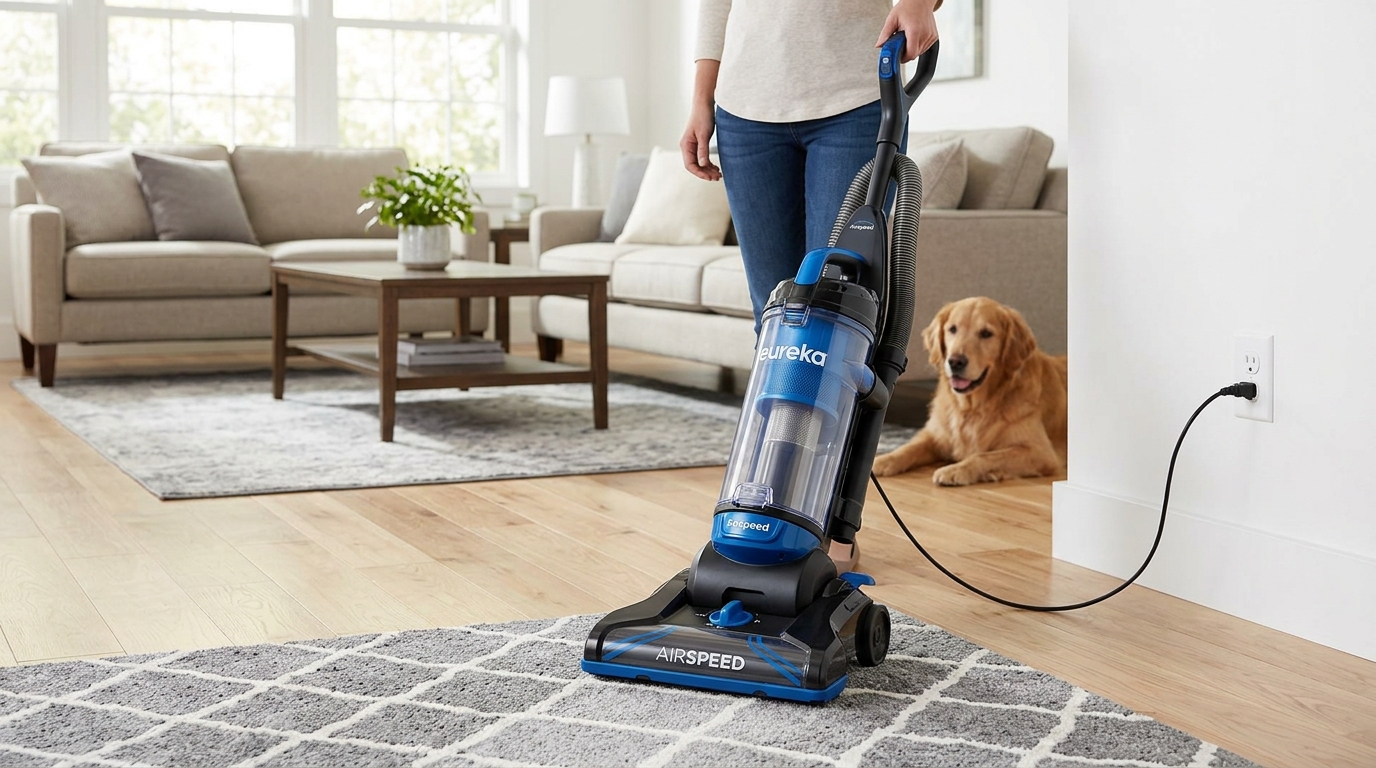
The Eureka Airspeed NEU10AE5 belongs to the family of lightweight upright vacuum cleaners. In an upright design, the motor, dust container, and cleaning head are combined in a single body. The user pushes it forward and back across the floor by holding a handle, and the machine is powered through a cord that plugs into a wall outlet.
The listing title emphasizes two ideas: that the vacuum is intended for home use and that it is ultra-lightweight. The second point is the defining characteristic of the Airspeed line. Instead of competing on size or capacity, this style of vacuum is designed around ease of lifting, carrying, and maneuvering. It is aimed at people who value a machine that does not feel like a burden.
In practical terms, the purpose of this product is to support routine household cleaning, such as clearing dust from hard floors, picking up crumbs and everyday debris, and freshening up rugs and carpets. It is best understood as a general-purpose home vacuum rather than a specialized or industrial tool.
Because product specifications can be updated, readers who need exact measurements, included accessories, or the current configuration should confirm those details on the official listing. The descriptions in this article are general and are meant to explain the category and design approach.
Who This Type of Vacuum Is Designed For
Lightweight corded uprights are often considered by:
- People who want a plug-in vacuum but find traditional uprights too heavy
- Residents of apartments, condos, or smaller homes with limited storage
- Households with a combination of hard floors and area rugs
- Older adults or anyone who prefers equipment that is easy to lift and control
- Renters or first-time buyers looking for a straightforward everyday machine
- Families in multi-level homes who move a vacuum between floors regularly
The match depends on flooring, the size of the space, and personal preferences, so these groups should be seen as examples rather than rules.
Key Features
Feature lists can feel abstract until they are translated into everyday terms. The sections below explain the main characteristics associated with this style of vacuum and the kind of practical value each one may offer.
Ultra-Lightweight Construction
The most important trait is right there in the name. A lightweight vacuum is designed to reduce the effort involved in lifting, carrying, and pushing. This may make a noticeable difference on stairs, when moving between rooms, or when cleaning over a long session.
Lower weight can also help with control. A machine that is easier to steer may feel more natural around furniture and in tight corners. That said, weight is only one part of how a vacuum feels in the hand. Balance, handle shape, and the way the wheels roll all contribute to the overall impression, and people differ in what they find comfortable.
Corded Power Supply
Unlike battery-powered stick vacuums, this style of machine draws its power directly from an outlet. The main advantage is consistent operation for as long as the vacuum is plugged in. There is no battery to charge, no runtime to monitor, and no gradual loss of battery capacity over the years.
The corresponding limitation is reach. The cord restricts how far the vacuum can travel before the user needs to switch outlets. Homes with few outlets or large open spaces may make this more noticeable.
Bagless Dust Container
Machines in this category generally use a removable dust cup instead of a disposable bag. Debris is collected in a transparent or semi-transparent container that is emptied into a trash bin. One possible advantage is that there are no replacement bags to purchase. Another is that the user can see how full the container is and choose when to empty it.
A common tip for bagless designs is to empty the container slowly and close to the trash can, which helps limit the amount of dust released into the air.
Cleaning Head with Brush Roll
Upright vacuums typically include a cleaning head containing a rotating brush roll. This brush is designed to agitate carpet fibers so that embedded dust and hair can be lifted more easily. On hard floors, a brush roll can help sweep debris toward the suction opening, although some people prefer to adjust or disable it on smooth surfaces to avoid scattering larger particles.
Readers with a mix of flooring may want to check whether the model offers any way to adjust the brush or the head height, and how it behaves when moving from carpet to hard floor.
Multi-Surface Suitability
Lightweight uprights are commonly presented as suitable for a variety of household floors, including hard flooring, low-pile carpet, and area rugs. This is a broad description, and real-world suitability varies. Thicker, higher-pile carpets can be more demanding for any vacuum, so people with those floors may want to review the manufacturer’s recommendations.
Filtration
A vacuum’s filter is designed to capture fine particles so that they remain inside the machine rather than returning to the room. Depending on the model, filters may be washable or may require occasional replacement. Filter care is one of the most overlooked parts of vacuum ownership, but it plays a real role in keeping airflow consistent over time.
Attachments and Reach
Many upright vacuums include tools for tasks the main head cannot handle well, such as stairs, upholstery, or narrow gaps. The specific accessories included with any given model can vary, so readers who care about detail work should check the official listing to see exactly what comes with the machine.
Materials and Design
Vacuum cleaners in the lightweight upright category are typically made from molded plastics, with a small number of reinforced or metal parts in areas that experience more stress, such as fasteners and joints. The use of plastic is part of how these machines keep their weight down.
Build and Structure
Lightweight construction does not automatically mean fragile, but it does mean that small design details matter. When evaluating any vacuum of this type, readers may find it useful to pay attention to how firmly the dust cup locks into place, how securely the handle and body connect, and how smoothly the wheels turn. These features shape everyday use more than a headline specification does.
Profile and Appearance
Upright vacuums of this kind usually have a slim, simple profile. The styling is generally functional, with color accents used to highlight controls or removable parts. For most people, ease of use will matter more than looks, though a tidy design can be helpful if the vacuum is stored in a visible area such as a hallway or a corner of the living room.
Cord Management
Since the machine is corded, the way the cord is stored and handled affects convenience. Many uprights include hooks or wraps on the body to keep the cord organized between uses. A cord that is long enough to reach across a room without repeated unplugging can make cleaning smoother, so readers may want to check the stated cord length on the official listing.
Storage Considerations
A slim upright can often be stored in a closet, laundry room, or utility corner. Because it is designed to be light, moving it in and out of storage is generally easier than with a heavier machine. Still, it is worth measuring available space if storage is limited.
Performance
Describing performance responsibly means separating what a product is designed to do from what any particular user will actually experience. This article is not based on hands-on testing, so the following should be read as an explanation of design intent.
What the Vacuum Is Designed to Do
The Airspeed NEU10AE5 is designed to remove everyday household debris, including dust, crumbs, pet hair, and small particles, from a range of floor types. Its combination of suction, a brush roll, and a light frame points toward a focus on convenience and regular upkeep rather than heavy-duty cleaning.
Conditions That Shape Real-World Results
No two homes are alike, and results with any vacuum depend on the conditions in which it is used. Some of the main variables include:
- Flooring: Hardwood, tile, laminate, low-pile carpet, and thick rugs all interact differently with the same machine.
- Debris type: Fine dust, sand, cereal, litter, and long hair each behave differently during vacuuming.
- Container and filter condition: A full dust cup or a clogged filter can noticeably reduce airflow.
- Brush roll condition: Tangled hair or threads can slow the brush and reduce its effectiveness.
- Technique: Slow, overlapping passes generally allow for more thorough cleaning than quick sweeps.
Because of these variables, two owners of the same model may describe very different experiences. That is why it usually makes more sense to consider how a vacuum’s design fits your circumstances than to expect the same outcome as someone else.
Sound and Handling
Every vacuum produces noise from its motor and airflow. Loudness varies by design, and individual sensitivity to sound varies too. People living in apartments, or those with noise-sensitive pets or young children, may want to keep this in mind. Handling, on the other hand, depends on weight, balance, and how the cleaning head pivots around obstacles.
Reading Specifications Wisely
Numbers in a product listing can be useful for rough comparisons, but they represent stated figures rather than guaranteed results. Different companies measure and describe performance in different ways. A balanced approach is to treat specifications as a starting point and to weigh them alongside real-life factors such as floor type, home size, and personal comfort.
Common Uses
A lightweight upright vacuum is generally intended for regular household cleaning. Here are some of the situations in which people commonly use this type of machine.
Weekly Whole-Home Cleaning
The most obvious use is a routine pass over living rooms, bedrooms, hallways, and dining areas. Because the machine is designed to be easy to move, some people find it simpler to keep up with a regular schedule.
Kitchen and Dining Area Cleanup
Crumbs, dust, and tracked-in dirt tend to collect in high-traffic areas. A plug-in vacuum can be useful for dealing with these spots without worrying about battery levels.
Pet Hair Maintenance
Homes with pets often benefit from frequent vacuuming. A brush roll may help lift hair from rugs and floors, although the amount of effort involved depends on the type of coat and the material being cleaned. Households with heavy shedding may find that they need to empty the container and clear the brush more often.
Rugs and Low-Pile Carpets
Area rugs and lower-pile carpeting are common in many homes, and lightweight uprights are frequently used on them. Readers with thicker carpet should check the manufacturer’s guidance to see if the machine is appropriate.
Stairs and Upholstery
With suitable attachments, an upright can help clean stairs, sofa cushions, or chair seats. The effectiveness of these uses depends on the accessories included and the fabrics involved, so it is wise to check care labels before vacuuming delicate materials.
Seasonal Refreshes
Before guests arrive or during a seasonal clean, many people vacuum areas that are normally skipped, such as behind furniture or along baseboards. A light machine can make these extra tasks less tiring.
Advantages
Every product has strengths, and it helps to look at them without exaggeration. These are some possible advantages of this style of vacuum.
Easy to Lift and Carry
Reduced weight is the central advantage. It may make a real difference for those who dislike hauling heavy equipment or who need to carry a vacuum between floors.
Steady Plug-In Power
Since the vacuum draws power from an outlet, there is no need to manage battery life. It can run for as long as needed without interruption from a low-battery warning.
Simple Operation
Most lightweight uprights have a straightforward layout with few controls. This can appeal to people who prefer a machine that does not require much setup or learning.
Bagless Convenience
A bagless system removes the need to buy and change bags. It also allows the user to see when the container is filling up.
Practical Storage
A slim body can be stored in a closet or corner without occupying much room, which is helpful in smaller homes.
No Battery Aging
Because there is no rechargeable battery, there is no gradual loss of battery capacity to consider over the years.
Things to Consider
A balanced discussion has to include possible limitations. Suitability depends heavily on personal preferences, home layout, and cleaning habits.
Cord Reach
A corded vacuum ties the user to an outlet. In larger homes, or in spaces where outlets are far apart, this may mean unplugging and replugging several times during a session.
Dust Container Size
Lightweight machines often have smaller containers than full-size uprights. Households with heavy shedding pets or large floor areas may need to empty the container more frequently.
Trade-Offs of Light Construction
Saving weight often involves design compromises. Readers who prioritize maximum capacity, a wide cleaning path, or very heavy-duty performance may prefer a larger machine, even if it is less convenient to carry.
Deep or High-Pile Carpet
Lightweight uprights are generally designed for everyday household cleaning. Those with thick, plush carpeting may want to check whether this model is recommended for their flooring.
Maintenance Responsibilities
Bagless vacuums rely on the user to keep the filter clean and the brush roll free of tangles. Skipping these tasks can reduce performance over time.
Personal Comfort and Preferences
Weight, handle feel, noise, and appearance are all subjective. What one person finds comfortable, another may not, so thinking about your own habits and physical needs is a sensible step.
Comparison with Similar Product Categories
Instead of comparing individual brands, it is more useful to see how lightweight corded uprights differ from other vacuum categories.
Versus Heavier Full-Size Uprights
Full-size uprights often provide wider cleaning heads and larger dust containers, which may suit bigger homes. Lightweight versions trade some of that capacity for easier handling and simpler storage. The right choice depends on the size of the space and how much the user values portability.
Versus Cordless Stick Vacuums
Cordless sticks are designed for freedom of movement and quick cleanups without outlets. Their runtime depends on the battery, and battery capacity may decline over time. A corded upright offers continuous power but less freedom to roam.
Versus Canister Vacuums
Canister vacuums keep the motor and dust container in a separate unit joined to the cleaning head by a hose. That arrangement can work well for stairs, upholstery, and detailed cleaning, though it involves managing multiple parts. Uprights are usually seen as more direct for open floor areas.
Versus Robot Vacuums
Robot vacuums are designed for automated, scheduled upkeep of open floors. They can reduce day-to-day effort but are not typically intended to replace manual cleaning for stairs, corners, and furniture. Some households use both types together.
Versus Handheld Vacuums
Handheld vacuums are convenient for small spills and short jobs but are not designed for whole rooms. A lightweight upright with attachments can partly cover small tasks while also handling larger areas.
Maintenance and Care
Good upkeep helps any vacuum work as intended for longer. Always consult the manufacturer’s manual for model-specific instructions, and unplug the machine before performing any maintenance.
Emptying the Dust Container
Empty the container before it is completely full. Doing this slowly over a trash bin helps limit airborne dust and supports steady airflow.
Cleaning or Replacing the Filter
Filters trap fine particles and gradually accumulate dust. Some are washable and must be fully dry before being reinstalled, while others are replaced periodically. Following the manual’s schedule is the safest approach.
Clearing the Brush Roll
Hair, thread, and fibers can wrap around the brush roll. Periodically check it and carefully remove tangles with scissors or a seam ripper, taking care not to damage the bristles.
Checking for Blockages
If suction seems weaker than usual, look for debris trapped in the hose, the cleaning head, or the container inlet. Clearing a blockage often restores normal airflow.
Caring for the Cord
Avoid pulling the plug out by the cord itself, and check the cord occasionally for signs of wear or damage. Wrapping it loosely, without tight bends, helps preserve its condition.
Wiping the Exterior
A slightly damp cloth can be used to clean the body, handle, and wheels. Avoid harsh chemicals or excess water near electrical parts.
Storage
Store the vacuum in a dry, stable spot. Keeping any attachments together with the machine makes them easier to find when needed.
Frequently Asked Questions
1. What type of vacuum is the Eureka Airspeed NEU10AE5?
It is a lightweight upright vacuum cleaner intended for home use. It is designed to be easy to lift and push, and it operates using a power cord.
2. Does this vacuum use a bag?
Lightweight uprights in this category commonly use a bagless dust container that is emptied into a trash bin. Readers should confirm the design details on the official product listing.
3. Is it suitable for carpet and hard floors?
Machines of this style are generally intended for multiple surfaces, including hard floors and lower-pile carpet. Results vary by flooring type, so it is worth checking the manufacturer’s guidance for your specific floors.
4. Is it a good fit for pet owners?
It may be useful for everyday pet hair, particularly with the help of a brush roll. Homes with heavy shedding may need to empty the container and clean the brush more often.
5. How light is “ultra-lightweight”?
The term suggests a body designed to be easier to carry than traditional uprights. The exact weight is listed in the official specifications, and how heavy it feels depends on the individual.
6. Does it need to be plugged in?
Yes, this type of vacuum is corded and requires an outlet during use. This provides steady power but limits how far you can travel before changing outlets.
7. How often should the filter be cleaned?
The ideal frequency depends on how often the vacuum is used and how dusty the home is. Many people check the filter every few weeks or when airflow drops, following the manufacturer’s recommendations.
8. What should I do if the brush stops spinning properly?
Unplug the machine and look for tangled hair or threads around the brush roll. Removing the tangles carefully often restores normal movement.
9. Can it be used on stairs?
Its low weight may make it easier to carry up stairs, and cleaning the steps themselves typically depends on the attachments included. Check the official listing for the accessories that come with the machine.
10. Is it easy to store?
A slim upright is generally designed to fit in a closet, corner, or utility space. Measuring your storage area against the product dimensions is a helpful step.
11. Will it work in a large home?
It may work well in small and medium spaces. Larger homes may require more frequent outlet changes and container emptying, so cord length and bin capacity are worth considering.
12. What should I look at before choosing a lightweight upright vacuum?
Think about floor types, home size, storage space, cord reach, pet shedding, and how the weight and handle feel to you. Reviewing the manufacturer’s specifications can help clarify whether the machine matches your needs.
Final Thoughts
The Eureka Airspeed NEU10AE5 represents a straightforward approach to home vacuuming: a corded upright that puts ease of handling at the center of its design. For people who find traditional vacuums heavy or awkward, a lightweight body may make regular cleaning feel more manageable.
Like any household appliance, it involves trade-offs. A light frame can be easier to carry, but it may come with a smaller dust container than larger machines. A power cord offers steady performance, yet it limits how far the vacuum can travel without changing outlets. Simple controls are appealing to many users, while others may want more features.
The most useful way to approach a decision is to begin with your own situation: the floors in your home, the space available for storage, the amount of debris you usually deal with, and how the machine feels to hold and move. A vacuum that fits those factors is more likely to feel worthwhile in everyday use than one chosen for a single standout trait.