
Introduction
Vacuuming is a job most people would happily skip, yet dust, hair, and crumbs return no matter how carefully a home is kept. The tool people use for the job affects how often they do it. A machine that snags on furniture, refuses to turn a corner, or needs constant effort to push tends to be used less than one that glides across the floor and takes little coaxing.
That is a big reason upright vacuum cleaners with improved steering have drawn attention in recent years. Traditional uprights are known for covering wide floor areas quickly, but many people find them stiff to maneuver. Modern designs try to soften that trade-off with pivoting heads, redesigned brush rolls, and simpler ways to empty and clean the machine.
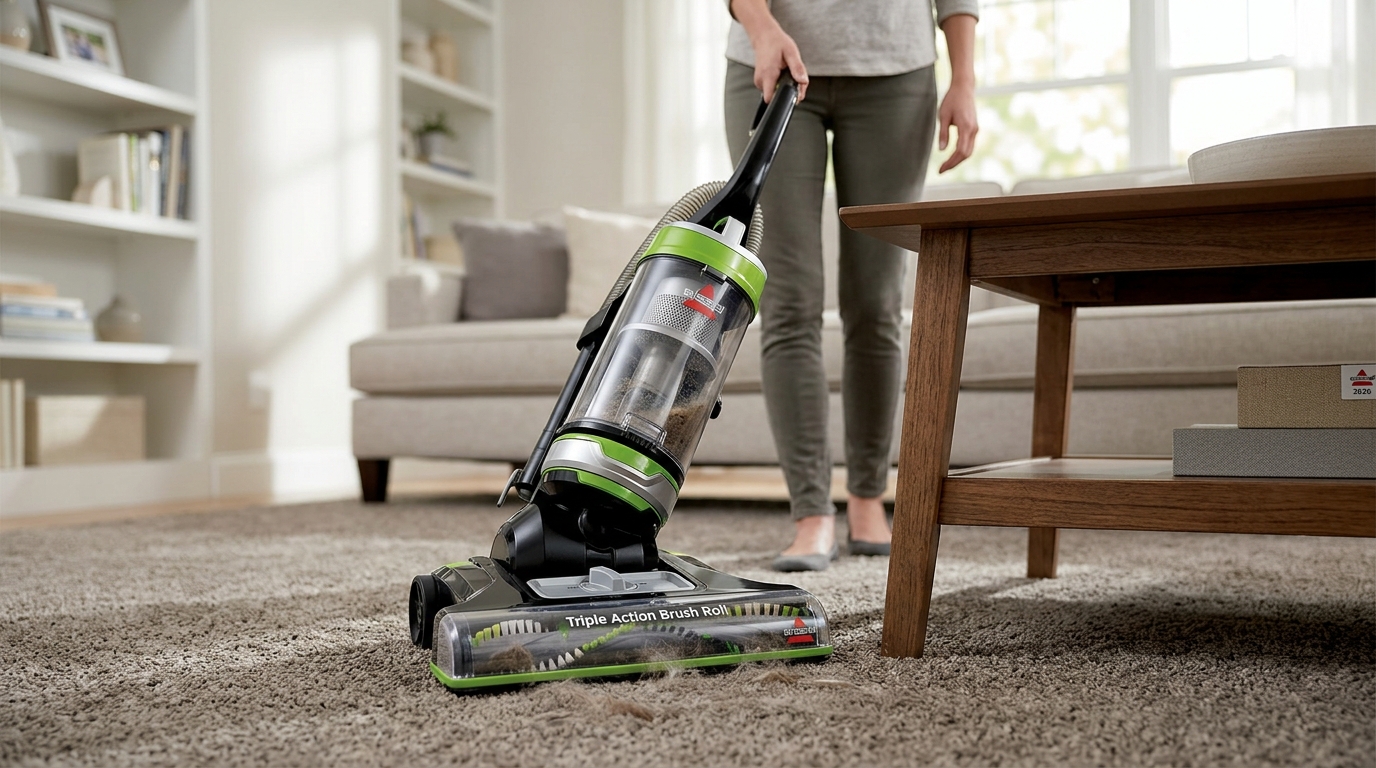
This guide looks at the Bissell CleanView Swivel Vacuum with Triple Action Brush Roll, model 3836, from an informational point of view. It explains what kind of vacuum this is, what its main features are designed to do, which households may find it relevant, and which points deserve careful thought before a decision is made. It is based on general product-category knowledge rather than hands-on testing, and it does not promise any particular result. Readers who need exact specifications should confirm them on the official listing.
Product Overview
The Bissell CleanView Swivel 3836 belongs to the category of bagless upright vacuum cleaners. In this design, the motor, dust container, and cleaning head are combined in one body. The user holds a handle and pushes the machine across the floor, while a power cord supplies electricity from a wall outlet.
Two phrases in the product title describe its identity. The first is “Swivel,” which refers to a head designed to pivot so the vacuum can change direction with less effort. The second is “Triple Action Brush Roll,” a description of a brush system meant to work on floor surfaces in more than one way at once. These two ideas point to a machine built around maneuverability and a more thorough approach to loosening debris.
The general purpose of this product is everyday household cleaning. It is intended to help with the routine tasks of picking up dust, crumbs, pet hair, and other loose debris from carpets, rugs, and many types of hard flooring. It is best understood as a general-purpose home vacuum, not as a specialized or commercial machine.
Understanding the Upright Format
Upright vacuums have been a staple in homes for decades. Their appeal comes from a few practical traits:
- The machine stands on its own body, so no hose or separate canister is needed for basic floor cleaning.
- The cleaning head is wide relative to many other categories, which can reduce the number of passes needed in open areas.
- The dust container is built into the body, keeping everything in one unit.
- Corded power provides steady operation without any need to monitor a battery.
These characteristics explain why uprights remain a common pick for family homes with plenty of carpet and open floor space.
Who This Type of Vacuum May Suit
A swivel-style bagless upright is often considered by:
- Families with a mix of carpeted rooms and hard floors
- Pet owners who deal with regular hair on rugs and furniture edges
- People who want a plug-in machine with consistent power
- Homeowners with several rooms who prefer wide, efficient cleaning passes
- Buyers who like a straightforward machine without a complicated setup
Suitability always depends on the layout of the home, the flooring, and personal preferences, so these groups are examples and not rules.
Key Features
Product titles tend to compress a lot of information into a few words. The sections below unpack each main feature in plain language and describe the kind of practical value it may offer.
Swivel Steering
A swivel design allows the cleaning head to pivot more freely, so the user can guide the machine around chair legs, table bases, and corners without wrestling with the handle. In a traditional upright, changing direction can require lifting or twisting the whole body. Improved steering is designed to reduce that effort.
For many people, this matters more than a headline specification. A vacuum that turns easily may encourage more thorough cleaning around furniture, since there is less temptation to skip awkward spots. The degree of improvement will vary from person to person and floor to floor, and carpet generally creates more resistance than smooth flooring.
Triple Action Brush Roll
The brush roll is the rotating part of the cleaning head that contacts the floor. A brush described as “triple action” is generally intended to combine different elements, such as bristles, softer fibers, or other agitating surfaces, so that it can loosen debris, sweep it toward the suction opening, and deal with a mix of particle types. The exact composition is defined by the manufacturer, so readers who want specifics should check the official product details.
The potential benefit is versatility. Fine dust, larger crumbs, and hair do not all behave the same way, and a brush built with several kinds of contact points may be better suited to variety. As always, results depend on the surface and the type of debris, and no brush design removes the need for regular cleaning.
Multi-Surface Cleaning
Machines in this class are commonly presented as suitable for both carpet and hard flooring. That description usually means the vacuum offers some way of adjusting to different floors, such as a brush roll that can be switched off, or a head that adapts to the surface. Households with a combination of rugs, tile, laminate, and hardwood may want to confirm how this model handles each surface.
Bagless Dirt Container
Instead of a disposable bag, this type of vacuum collects debris in a removable container that is emptied into a trash bin. One possible advantage is the absence of ongoing bag purchases. Another is visibility: the user can see when the container is filling and decide when to empty it.
The main consideration is dust release. Emptying a bagless container can send fine particles into the air if done quickly or carelessly. Many users find that emptying slowly and close to the bin helps limit this.
Cyclonic-Style Airflow
Bagless uprights commonly use a cyclonic approach, in which air spins inside the container so that heavier debris drops out of the airflow. The idea is to help maintain airflow for longer periods than a simple filter-only design might. Whether a given model achieves this in daily use depends on how well the filters and container are maintained.
Washable Filtration
Vacuum filters are designed to capture fine particles so they stay inside the machine. Some filters in this category are washable, which can reduce the need for replacements, while others must be swapped out periodically. A washable filter must be fully dry before reinstallation. Readers should check the manufacturer’s manual for the specific filter type and care schedule.
Attachments and Reach
Many uprights include a hose and accessories for stairs, upholstery, and narrow gaps that the main head cannot reach. The specific set of tools included with a particular model can change, so anyone who values detail cleaning should review the official listing to see exactly what comes in the box.
Corded Operation and Cord Length
Because the machine plugs into a wall, power is steady for as long as the vacuum is running. Cord length determines how much of a room can be covered before switching outlets, so it is a detail worth checking. A longer cord generally means fewer interruptions, particularly in larger rooms.
Materials and Design
Upright vacuums are typically built from molded plastics, with metal or reinforced parts in areas that face greater stress, such as fasteners, joints, and connection points. Plastic keeps manufacturing costs and weight down, which helps make the machine easier to push and carry.
Build and Structure
A number of small details often reveal more about everyday use than any specification sheet. These include how firmly the dirt container clicks into place, how securely the handle attaches to the body, how smoothly the wheels roll, and whether release latches feel solid. Readers who care about long-term durability may want to pay attention to these features.
Head Design and Profile
The cleaning head on a swivel upright is designed to sit close to the floor while remaining flexible. A low profile can help the machine reach under some furniture, though the exact clearance varies and is worth checking if the home has low sofas or beds.
Appearance
Styling on household vacuums is usually practical rather than decorative. Color accents often mark removable parts and controls, making them easier to identify. Most people will care more about how the machine operates than how it looks, although a tidy appearance may matter if it is stored somewhere visible.
Weight and Handling
Uprights are usually heavier than cordless sticks, though weight varies widely between models. A heavier body can offer stability during use but may feel harder to carry up stairs. Anyone who regularly moves a vacuum between floors should consider this before choosing.
Storage
An upright typically stands on its own and can be kept in a closet, utility room, or corner. Since the machine has a fixed height and footprint, measuring the intended storage space against the product’s dimensions is a sensible step.
Performance
Responsible discussion of performance means describing what a product is designed to do without promising what any user will experience. This article does not rely on hands-on testing, so everything below should be read as an explanation of design intent.
What the Vacuum Is Designed to Do
The Bissell CleanView Swivel 3836 is designed to pick up common household debris such as dust, crumbs, pet hair, and small particles from carpets, rugs, and hard floors. The combination of a multi-element brush roll, suction, and a pivoting head suggests a focus on regular household cleaning across varied surfaces.
Conditions That Influence Real-World Results
Every home is different, and many variables affect how any vacuum performs:
- Flooring type: Low-pile carpet, thick rugs, hardwood, tile, and laminate each interact differently with a brush roll and suction.
- Debris type: Fine dust, sand, cereal, litter, and long hair all behave differently during cleaning.
- Container fullness: A container that is close to full may reduce airflow.
- Filter condition: A dirty or damp filter can affect suction.
- Brush roll condition: Hair and threads wrapped around the roller can slow it down.
- Cleaning technique: Slow, overlapping passes tend to be more thorough than quick ones.
Because of these variables, two households can describe the same model quite differently. For that reason, it is more helpful to ask whether a machine’s design fits your own circumstances than to expect the same outcome as another person.
Suction and Airflow in Context
Suction is often the first quality people associate with a vacuum, but it is only one part of the picture. Airflow, brush design, head seal, and maintenance all contribute to how well debris is actually lifted and retained. A strong motor paired with a clogged filter, for example, may not clean as well as a moderate motor with clean components. Suction claims should therefore be read as one piece of information and not a complete measure of quality.
Sound and Comfort
Vacuum cleaners create noise through their motors and airflow. Sound levels vary between designs, and personal sensitivity differs. People who live in apartments, work from home, or share space with noise-sensitive pets may want to give this some thought. Comfort during use also depends on handle height, grip shape, and how much force is needed to push the machine across carpet.
Common Uses
A swivel upright vacuum is generally meant for regular household cleaning across multiple rooms. These are some of the situations in which people commonly use this type of machine.
Routine Room-by-Room Cleaning
The main use is weekly or more frequent cleaning of living rooms, bedrooms, hallways, and dining areas. The wide head and steady corded power are designed for covering open floor space without frequent pauses.
Furniture-Heavy Rooms
Rooms with chairs, tables, and other obstacles can slow cleaning. A swivel head is intended to make it easier to guide the machine around these obstacles, which may reduce frustration in crowded spaces.
Pet Hair Maintenance
Homes with dogs or cats often need consistent attention to hair on rugs and floors. A multi-element brush roll may help loosen and collect hair, though the effort involved depends on coat type, shedding level, and the fabric being cleaned. Homes with heavy shedding may need to empty the container and clear the brush more often.
Mixed Flooring Homes
Many households have carpet in some rooms and hard flooring in others. A vacuum designed for multiple surfaces allows one machine to handle both, though it is worth checking how the brush roll and suction behave when moving between the two.
Stairs and Upholstery
With the right hose and attachments, an upright can be used on stairs, sofa cushions, and chair seats. The results depend on which accessories are included and the type of fabric involved, so care labels should be checked before vacuuming delicate materials.
Seasonal and Occasional Cleaning
Before guests arrive or during a seasonal refresh, many people vacuum areas that are usually skipped, such as behind furniture, along baseboards, or in storage spaces. A machine with attachments can be useful for these extra tasks.
Advantages
Every product has strengths, and it helps to consider them without exaggeration. These are some possible advantages of this style of vacuum.
Easier Turning
The swivel design is intended to make steering less demanding, which may be helpful in rooms with a lot of furniture or tight corners.
A Brush System Designed for Variety
A multi-element brush roll is meant to address different kinds of debris at once, which may suit households with mixed messes.
Consistent Corded Power
Because the vacuum plugs into a wall, it does not depend on battery charge. Power stays steady throughout a cleaning session.
Wide Coverage on Open Floors
Uprights generally have broader cleaning heads than many stick or handheld models, which can help cover larger areas efficiently.
Bagless Convenience
There are no replacement bags to buy, and the user can see when the container needs attention.
Familiar, Simple Operation
Upright vacuums are widely understood. Most people can pick one up and use it without a lengthy learning process.
Things to Consider
A balanced discussion has to include possible limitations. Suitability depends heavily on personal preferences, home layout, and cleaning habits.
Weight and Carrying
Uprights are typically heavier than cordless sticks. Anyone who often carries a vacuum up and down stairs should think about how the weight would feel in daily use.
Cord Limitations
A corded design ties the user to an outlet. In large homes or rooms with few outlets, the cord may require repeated unplugging and replugging.
Container Size
The dirt container in any bagless vacuum has a limited capacity. Homes with heavy shedding pets or large carpeted areas may need to empty it more often than expected.
Maintenance Requirements
Bagless machines rely on the user to clean filters, empty the container, and keep the brush roll clear of tangles. Skipping these tasks can reduce performance over time.
Fit for Thick Carpet
Not every household vacuum is suited to very thick or high-pile carpet. Readers with plush flooring should review the manufacturer’s guidance to confirm compatibility.
Storage Space
An upright has a fixed height and footprint. Measuring the storage area first is a practical step, especially in smaller homes.
Personal Preferences
Weight, handle feel, noise, and appearance are subjective. What feels comfortable to one person may feel awkward to another, so thinking about your own habits and physical needs is a sensible step.
Comparison with Similar Product Categories
Instead of comparing individual brands, it is more useful to look at how swivel-style bagless uprights differ from other vacuum categories.
Compared with Traditional Uprights
Traditional uprights offer similar wide coverage but may feel less agile. A swivel design attempts to improve steering while keeping the benefits of the upright format.
Compared with Cordless Stick Vacuums
Cordless sticks are designed for freedom of movement and quick cleanups without outlets. Their runtime depends on the battery, and battery capacity can decline over the years. A corded upright offers uninterrupted power but less freedom to roam.
Compared with Canister Vacuums
Canister vacuums separate the motor and dust container from the cleaning head, connected by a hose. This layout can suit stairs, upholstery, and bare floors, but it involves handling more than one piece. Uprights are often viewed as more direct for open floor areas.
Compared with Robot Vacuums
Robot vacuums are designed for automated, scheduled cleaning of open floors. They can reduce daily effort but are not usually intended to replace manual cleaning for stairs, corners, and furniture. Some households use both types together.
Compared with Handheld Vacuums
Handheld vacuums are convenient for small spills but are not designed for whole rooms. An upright with attachments can cover both larger floors and some small tasks.
Compared with Compact Uprights
Compact uprights emphasize smaller size and lighter weight, which can help with storage. Full-size swivel uprights tend to offer wider heads and larger containers. The choice depends on the size of the home and how much the user values portability.
Maintenance and Care
Regular upkeep helps any vacuum work as intended for longer. Always consult the manufacturer’s manual for model-specific instructions, and unplug the machine before performing any maintenance.
Emptying the Dirt Container
Empty the container before it becomes completely full. Doing so slowly and near a trash bin helps limit airborne dust and supports steady airflow.
Cleaning or Replacing Filters
Filters accumulate fine dust over time. Washable filters should be rinsed according to the manual and left to dry completely before being reinstalled. A damp filter can lead to odors or damage. Non-washable filters should be replaced on the schedule the manufacturer recommends.
Clearing the Brush Roll
Hair, threads, and fibers can wrap around the roller and reduce its ability to spin. Check it periodically and carefully cut away any tangles with scissors or a seam ripper, taking care not to damage the bristles.
Checking the Hose and Attachments
If airflow feels weaker than usual, look for blockages in the hose, wand, or attachments. Removing trapped debris often restores normal airflow.
Caring for the Cord
Avoid yanking the plug from the outlet by the cord, and inspect the cord occasionally for wear. Wrapping it loosely, without tight bends, helps preserve its condition.
Wiping the Exterior
A slightly damp cloth can be used to clean the body, handle, and wheels. Avoid harsh chemicals or excess water near electrical components.
Storage
Keep the vacuum in a dry, stable spot away from heat sources. Storing attachments together with the machine makes them easier to find when needed.
Frequently Asked Questions
1. What type of vacuum is the Bissell CleanView Swivel 3836?
It is a corded, bagless upright vacuum cleaner designed for everyday household cleaning. Its swivel head is intended to improve steering, and its brush roll is designed to work on a variety of debris types.
2. What does “Triple Action Brush Roll” mean?
It refers to a brush system designed to combine more than one type of cleaning element so it can address different kinds of debris. The exact construction is described by the manufacturer, so the official listing is the best source for details.
3. What is the purpose of the swivel feature?
The swivel head is meant to let the cleaning head pivot more easily, making it simpler to steer around furniture and corners.
4. Does this vacuum use bags?
Bagless uprights in this category use a removable container that is emptied into a trash bin. Readers should confirm the design details in the official product information.
5. Can it be used on both carpet and hard floors?
Vacuums of this style are commonly designed for multiple surfaces. Results vary depending on carpet thickness and floor type, so it is wise to check the manufacturer’s guidance for your specific floors.
6. Is it suitable for homes with pets?
It is intended for general household debris, including pet hair. Suitability depends on the coat type, shedding level, and flooring. Homes with heavy shedding may need to empty the container and clean the brush more often.
7. Does it need to be plugged in?
Yes, this type of vacuum is corded and requires an outlet during use. This provides steady power but limits how far you can travel before changing outlets.
8. How often should the filter be cleaned?
The ideal frequency depends on how often the vacuum is used and how dusty the home is. Many people check the filter every few weeks or when airflow seems reduced, following the manufacturer’s recommendations.
9. What should I do if the brush stops spinning properly?
Unplug the machine and look for tangled hair or threads around the roller. Removing them carefully often restores normal movement.
10. Can it clean stairs?
With the appropriate hose and attachments, an upright can be used on stairs. The accessories included with the model determine how convenient this is, so check the official listing.
11. Is it heavy to carry?
Uprights are generally heavier than cordless sticks. The exact weight is listed in the official specifications, and how heavy it feels depends on the individual.
12. What should I consider before choosing an upright vacuum?
Think about floor types, home size, storage space, cord reach, pet shedding, and how the weight and handle feel to you. Reviewing the manufacturer’s specifications can help clarify whether the machine fits your needs.
Final Thoughts
The Bissell CleanView Swivel 3836 represents a familiar and practical approach to home cleaning: a corded, bagless upright with a pivoting head and a brush roll designed to handle varied debris. For households with several rooms, mixed flooring, and a preference for steady power, this style of vacuum addresses many everyday needs.
Like any appliance, it involves trade-offs. Corded power removes battery concerns but limits how far the machine can travel. A wide upright body can cover open floors efficiently but may feel heavier than a stick vacuum on stairs. A bagless system saves on replacement bags but asks the user to keep up with filter and container care.
The most useful way to approach a decision is to begin with your own home. Consider the type of flooring, the amount of furniture, the presence of pets, the space available for storage, and how the machine feels to hold and push. A vacuum that matches those factors is more likely to feel worthwhile in daily use than one chosen only for a single standout feature.