
Introduction
Canister vacuums are the quiet veterans of home cleaning. While upright and cordless models get most of the attention, the canister layout has stayed relevant for decades because it solves a specific set of problems: reaching under low furniture, cleaning stairs without hauling a heavy body up each step, and switching between bare floors and rugs without much fuss.
The reason is the design itself. A canister vacuum separates the parts that do the heavy lifting from the part the user actually steers. The motor and dust collection sit in a compact body that rolls along behind, while the user holds a lightweight wand and cleaning head. That split can make a machine feel more manageable than its specifications suggest.
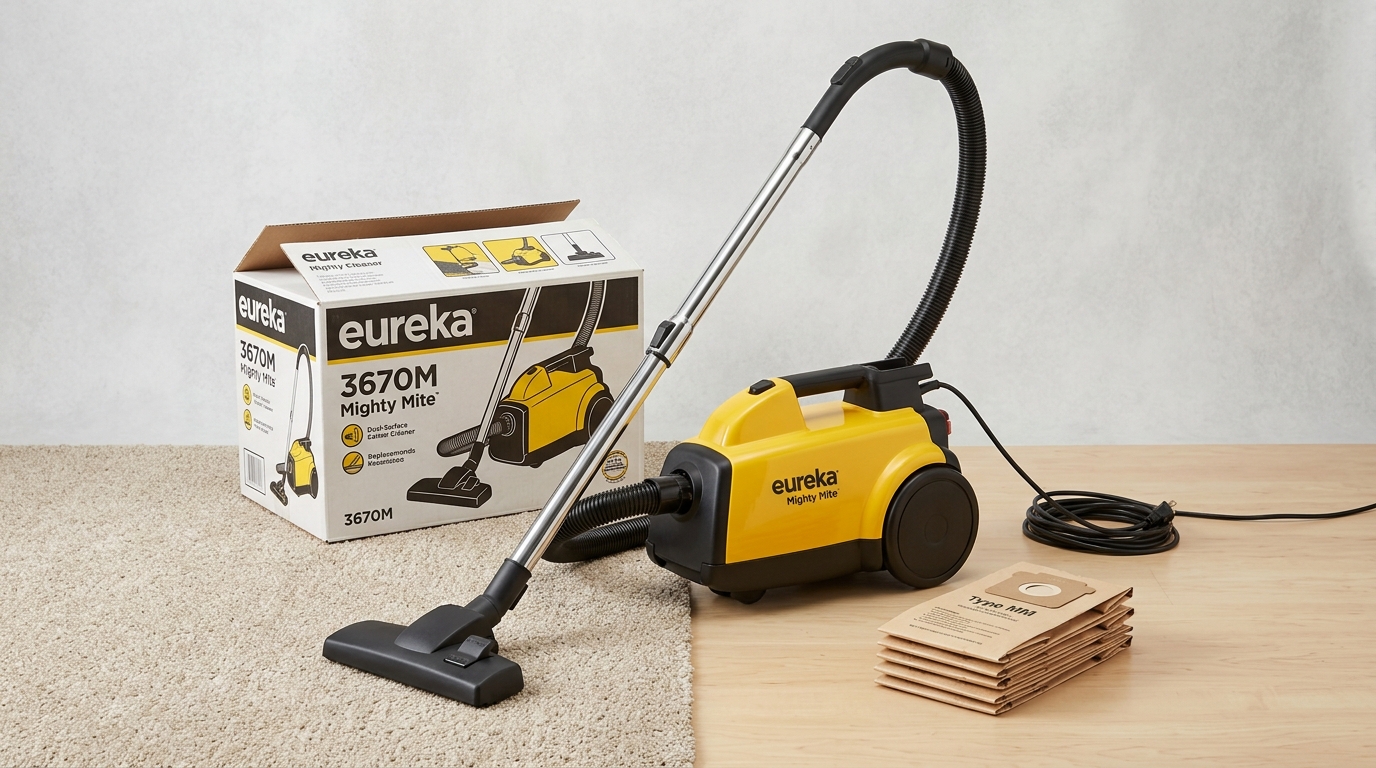
Product titles for these vacuums can be confusing. They mention bags, weight, floor types, and colors, and it is not always clear what any of it means in daily use. This guide takes a closer look at the Eureka 3670M canister cleaner, described as a lightweight vacuum for carpets and hard floors that comes with five bags and a yellow finish. It explains what this type of machine is, how its main features are designed to work, who might find it relevant, and what is worth thinking about before choosing.
The article is based on general knowledge of the product category, not hands-on use. It avoids promising specific results, and readers who need exact specifications should confirm them on the official listing.
Product Overview
The Eureka 3670M is a bagged canister vacuum cleaner. In this format, the body of the machine houses the motor and a disposable dust bag. A flexible hose runs from the body to a rigid wand, and the wand connects to a floor tool. The user moves the wand and floor tool across the surface while the body follows on wheels.
Several phrases in the title help define what the product is meant to be:
- Canister: the motor and dust collection are in a separate wheeled unit connected by a hose.
- Lightweight: the machine is intended to be easy to carry and pull.
- Carpets and hard floors: it is presented as a general-purpose home vacuum for varied surfaces.
- With 5 bags: it is a bagged design, and a small supply of bags is included with it.
- Yellow: the color of the body, which is a matter of appearance and does not affect how it works.
The purpose of this product is fairly simple. It is meant to support regular household cleaning, such as picking up dust, crumbs, hair, and everyday debris from rugs, carpets, tile, laminate, and hardwood. It is not designed as an industrial or commercial machine, and it is best understood as a practical tool for ordinary homes.
Understanding the Canister Format
Canister vacuums have a few defining traits that set them apart from other categories:
- The heavy parts stay on the floor, so the user holds only the wand and hose.
- The hose and wand allow easy access to stairs, furniture edges, and tight areas.
- The floor tool is often low and slim, which may help under beds and sofas.
- A bag-based dust system keeps debris sealed until the bag is discarded.
These qualities explain why canister vacuums remain popular with people who have stairs, a lot of hard flooring, or a preference for a lighter tool in hand.
Who This Type of Vacuum May Suit
A lightweight bagged canister is often considered by:
- People with a mix of hard floors and area rugs
- Homes with stairs or multiple levels
- Individuals who prefer to hold a lighter tool instead of pushing a heavy upright
- Allergy-conscious households that like the idea of sealed disposal bags
- Apartment dwellers who want a machine that stores in a closet
- Buyers who value a traditional, straightforward design over added electronics
These are examples rather than rules. The right match depends on the layout of the home, the flooring, and personal habits.
Key Features
The sections below break down the main features associated with this style of vacuum. Each one is explained in plain language, along with the practical value it may offer.
Lightweight Canister Body
The canister body is the part that rolls behind the user, so its weight matters less during cleaning than it would in an upright. Still, a lighter body is easier to lift onto a staircase, carry between rooms, or store. It also tends to be easier to tow around corners without tipping.
Weight is subjective. A machine that feels light to one person may feel slightly awkward to another depending on the wheels, the balance, and how the hose is attached. Readers who are particularly sensitive to weight should look up the listed specification and think about how they would handle it.
Bagged Dust Collection
This is one of the defining characteristics. Instead of an open dust cup, the machine collects debris in a disposable bag. There are several reasons some people prefer this approach:
- The bag can be removed and discarded without exposing the user to much of the dust inside.
- There is no cup to empty and rinse.
- A fresh bag can help maintain a clean airflow path.
The other side of the coin is that bags are a recurring supply. The five bags that come with the machine give an initial stock, but replacements will eventually be needed, and it is worth confirming which bag type fits the model before ordering. Some users like the tidy disposal, while others prefer to avoid buying bags altogether.
Included Bags
Having five bags included means the buyer can start using the vacuum immediately and continue for some time without a separate purchase. How long they last depends entirely on how often the vacuum is used, how large the home is, and how much debris is collected. A household with several shedding pets will fill bags faster than a small apartment with hard floors.
Hose and Wand System
The flexible hose and telescoping or fixed wand are what give a canister its reach. The user can extend or shorten the wand, angle the tool under furniture, and switch to attachments for stairs or upholstery. This reach can be especially useful for people who dislike bending and stretching.
Hoses can vary in length and flexibility, and the way the wand connects to the floor tool affects how easily it turns. Readers who care about maneuverability may want to look at the details on the official listing.
Floor Tool for Carpets and Hard Floors
The title mentions cleaning carpets and hard floors, which suggests a floor tool that can adapt to both. Many canister vacuums use a switchable or adjustable head. On carpet, the head is set to sit lower against the fibers so that suction can pull dust from between them. On hard flooring, it is set to glide across the surface without scratching or scattering debris.
The exact mechanism differs between models, so it is worth checking how this one is designed. Very thick or high-pile carpets can be more demanding for any household vacuum, and the manufacturer’s guidance is the best source for whether a particular floor type is appropriate.
Suction and Airflow
The title describes the machine as powerful, which is a common term in vacuum listings. In general, suction is influenced by the motor, the airflow path, the seal of the hose and connections, the condition of the bag, and the design of the floor tool. It is only one part of performance, and it is best read as an indication of the machine’s intended capability rather than a promise.
One practical point about bagged vacuums is that airflow can gradually decrease as the bag fills. Many users find it helpful to replace bags before they are completely full, not only when the machine seems to weaken.
Filtration
Canister vacuums typically include one or more filters in addition to the bag. These are designed to capture fine particles that pass through the bag material so they stay inside the machine. Depending on the model, filters may be washable or may need periodic replacement. Filter care is a small task that has a real effect on how consistently a vacuum works over time.
Attachments
Many canister vacuums come with tools such as a crevice tool, a dusting brush, or an upholstery nozzle. These help with tasks the main floor tool cannot handle well, including baseboards, furniture edges, and stairs. The exact accessories can vary, so readers who care about detail cleaning should check what is included on the official listing.
Materials and Design
Household canister vacuums are typically built from molded plastics, sometimes with metal in the wand or in areas exposed to higher stress. Plastic construction keeps the weight low and the cost manageable, which fits the idea of a lightweight machine.
Build and Structure
Small design details often say more about everyday use than a specification sheet does. When considering a canister vacuum in general, it may be worth paying attention to how securely the bag compartment latches, how firmly the hose connects to the body, whether the wand locks in place, and how smoothly the wheels roll. These features shape how the machine feels over months of use.
Color and Appearance
The yellow finish is a matter of style. Bright colors can make a vacuum easy to spot in a closet or utility room, and some people simply enjoy a livelier look than the usual grey or black. Color has no effect on how the machine cleans, so it is best treated as a personal preference.
Wheels and Mobility
Because the canister is pulled behind the user, the wheels play a bigger role than they do on an upright. Smooth-rolling wheels help the body follow along without snagging, while poorly designed wheels can catch on thresholds or cords. Readers with many door sills or thick rugs may want to consider how easily a canister body will travel over them.
Cord and Cord Storage
This vacuum is corded, meaning it draws power from a wall outlet. Many canisters include a retractable cord reel, which can make storage tidier and save effort. Cord length determines how much of a room can be cleaned before the user needs to move to another outlet, so it is a detail worth checking.
Storage Considerations
Canister vacuums tend to store compactly in a closet or utility space, since the body is small and the wand can often be clipped or nested alongside it. Measuring the intended storage area is a sensible step, particularly in smaller homes.
Performance
Describing performance responsibly means separating what a product is designed to do from what any individual user will experience. This article is not based on hands-on testing, so the following should be read as an explanation of design intent.
What the Vacuum Is Designed to Do
The Eureka 3670M is designed to pick up common household debris such as dust, crumbs, pet hair, and small particles from a range of surfaces. The combination of a bagged canister body, a flexible hose, and a floor tool that adapts to carpets and hard floors suggests a focus on flexibility and everyday upkeep.
Conditions That Influence Real-World Results
Results vary from home to home. Some of the main variables include:
- Floor type: Hardwood, tile, laminate, low-pile carpet, and thick rugs each respond differently.
- Debris type: Fine dust, sand, cereal, litter, and long hair all behave differently during vacuuming.
- Bag condition: A nearly full bag can reduce airflow and weaken pickup.
- Filter condition: A clogged or damp filter can also affect performance.
- Hose and wand seals: Leaks at connection points can reduce suction.
- Technique: Slow, overlapping passes usually clean more thoroughly than fast sweeps.
Because of these factors, two owners of the same model can describe very different experiences. That is why it makes more sense to judge a vacuum by how well its design fits your own situation than to expect identical outcomes.
Sound and Comfort
Every vacuum produces noise from its motor and airflow. Because the motor sits in the canister body, some people find that the sound feels slightly further away than with an upright, although this depends on the design. People who live in apartments, work from home, or share space with noise-sensitive pets may want to consider sound levels. Comfort also depends on wand length, grip shape, and how easily the hose moves.
Reading Specifications Wisely
Words like “powerful” and “lightweight” in a title are descriptive terms, not measured guarantees. Different manufacturers describe their products in different ways, so it helps to treat such language as a starting point. A balanced approach is to look at the actual specifications, then weigh them against real-life factors such as floor types, home size, and personal comfort.
Common Uses
A lightweight canister vacuum is generally intended for regular household cleaning. These are some of the situations in which people commonly use this type of machine.
Hard Floor Cleaning
Tile, laminate, and hardwood are common in modern homes, and canister vacuums are often used on them because the floor tool can be lightweight and easy to glide. Many people also like that the machine does not push debris around as much as some brush-driven designs can.
Area Rugs and Low-Pile Carpets
Homes with a mixture of bare floor and rugs are one of the most common settings for this type of machine. Being able to switch the tool between surfaces means one vacuum can handle both. As always, thicker carpets should be checked against the manufacturer’s recommendations.
Stairs
Stairs are one of the areas where a canister layout can be especially convenient. The user can set the body on the floor or a landing and clean several steps using the wand and hose, without carrying a full upright body up each flight.
Under Furniture
A slim floor tool and adjustable wand may make it easier to reach beneath beds, sofas, and low cabinets. The exact clearance depends on the tool’s height, so homes with very low furniture should check the dimensions.
Baseboards, Corners, and Edges
With a crevice tool or dusting brush, the vacuum can be used along baseboards, in corners, and around window sills. These are areas where floor heads often struggle to reach.
Upholstery and Light Detail Work
Depending on the attachments included, the vacuum may be used on sofa cushions, chair seats, or curtains. It is always wise to check fabric care labels before using a vacuum on delicate materials.
Everyday Pet Hair
Homes with pets need frequent attention to hair on floors, rugs, and furniture. A canister vacuum with a suitable floor tool and attachments may help manage this, though the effort involved depends on the pet’s coat and the surface being cleaned.
Advantages
Every product has strengths, and it helps to look at them without exaggeration. These are some possible advantages of this style of vacuum.
Light in the Hand
Since the user holds only the wand and hose, the tool being controlled tends to feel lighter than a full upright. This may reduce fatigue during longer cleaning sessions.
Flexible Reach
The hose and wand system allows the machine to handle stairs, furniture edges, and tight spots that a rigid upright body cannot easily reach.
Good Fit for Mixed Flooring
A floor tool designed for both carpets and hard floors lets one machine cover the whole home, which may be practical for households with varied surfaces.
Sealed Bag Disposal
For those who dislike dust exposure, removing a full bag and discarding it may feel cleaner than emptying an open container.
Included Starter Bags
Having five bags included means the machine is ready for use right away and covers an initial period of cleaning without an immediate additional purchase.
Steady Plug-In Power
A corded machine provides consistent operation for as long as it is plugged in, with no battery to charge or replace.
Compact Storage
The relatively small body and detachable wand make storage in a closet or utility area fairly straightforward.
Things to Consider
A balanced discussion has to include possible limitations. Suitability depends heavily on personal preferences, home layout, and cleaning habits.
Ongoing Bag Purchases
Because the machine uses disposable bags, replacements will be needed over time. Readers should confirm the correct bag type and consider how easy it is to find. Some people prefer bagless designs to avoid this recurring cost.
Managing Two Pieces
A canister has a body and a wand, and the user must handle both. The body can occasionally catch on furniture or tip on thresholds, which some people find less convenient than the single-unit design of an upright.
Cord Reach
A corded vacuum ties the user to an outlet. In larger homes, or in rooms with few outlets, this may mean unplugging and replugging several times during a session.
Carpet Suitability
Canister vacuums are generally designed for everyday household cleaning. People with thick or high-pile carpeting should check the manufacturer’s guidance to confirm that the machine is appropriate.
Cleaning Width
The floor tool on a canister is often narrower than the head on an upright. In large open rooms, this may mean more passes to cover the same area.
Bag Fullness and Airflow
A filling bag can reduce airflow before it is completely full, so bags may need to be replaced more often than some users expect.
Personal Preferences
Weight, hose feel, noise, and appearance are subjective. What feels comfortable to one person may not to another, so it helps to think about your own habits and physical needs.
Comparison with Similar Product Categories
Instead of comparing individual brands, it is more useful to look at how a bagged canister differs from other vacuum categories.
Canisters and Upright Vacuums
Uprights combine the motor, container, and cleaning head into one body that the user pushes. They often have wider cleaning heads and can cover open floors quickly, but they tend to be heavier and less flexible on stairs. Canisters offer easier reach and a lighter tool in hand, with the trade-off of managing two parts.
Canisters and Cordless Stick Vacuums
Cordless sticks are designed for freedom of movement and fast cleanups. Their runtime depends on a battery, and battery capacity can decline over the years. A corded canister offers steady power for as long as needed, though with less freedom to roam.
Canisters and Robot Vacuums
Robot vacuums are designed for automated, scheduled upkeep of open floors. They can reduce day-to-day effort but are not typically intended to replace manual cleaning for stairs, corners, and furniture. Some households use both a robot and a manual vacuum.
Canisters and Handheld Vacuums
Handheld vacuums are convenient for small spills and short tasks but are not designed to clean whole rooms. A canister with attachments can handle both larger floors and detail work.
Bagged and Bagless Designs
Bagged machines seal debris inside a disposable bag, which can make disposal tidier but adds a recurring supply. Bagless machines use a container that is emptied and reused, which avoids buying bags but can release dust when emptied. Neither approach is universally better, and the choice often comes down to personal preference.
Maintenance and Care
Good upkeep helps any vacuum work as intended for longer. Always consult the manufacturer’s manual for model-specific instructions, and unplug the machine before performing any maintenance.
Replacing the Bag
Change the bag before it is completely full. A full bag can restrict airflow and reduce pickup. When removing it, follow the manufacturer’s instructions, and dispose of it carefully to avoid releasing dust.
Checking Filters
Filters capture fine particles and gradually accumulate dust. Some are washable and must be fully dry before reinstalling, while others are replaced periodically. Following the manual’s schedule is the safest approach.
Inspecting the Hose and Wand
If suction seems weaker than usual, check the hose, wand, and attachments for blockages. Coins, paper, or clumps of hair can sometimes become lodged. Clearing them often restores normal airflow.
Cleaning the Floor Tool
Hair and threads can gather around the brush or in the opening of the floor tool. Periodically check it and carefully remove tangles with scissors or a seam ripper, taking care not to damage the bristles.
Caring for the Cord
Avoid pulling the plug out by the cord, and check the cord occasionally for signs of wear. If the machine has a cord reel, let it retract gently rather than allowing it to snap back.
Wiping the Exterior
A slightly damp cloth can be used to clean the body and wheels. Avoid harsh chemicals or excess water near electrical parts.
Storage
Keep the vacuum in a dry, stable place away from heat sources. Storing the wand and attachments together with the body makes them easier to find when needed.
Frequently Asked Questions
1. What type of vacuum is the Eureka 3670M?
It is a corded, bagged canister vacuum cleaner intended for everyday home use. The motor and bag are housed in a wheeled body that follows the user, while the wand and floor tool do the cleaning.
2. Does it use bags or a dust cup?
It is described as a bagged model, and the listing states that five bags are included. Readers should confirm the correct replacement bag type before buying more.
3. How long will five bags last?
There is no single answer. It depends on the size of the home, how often the vacuum is used, the type of flooring, and how much debris is collected. A household with several pets will generally use bags faster than a small apartment.
4. Can it be used on both carpet and hard floors?
The title presents it as suitable for both. Results vary by carpet thickness and floor type, so it is sensible to check the manufacturer’s guidance for your specific surfaces.
5. Is it suitable for stairs?
Canister vacuums are often used on stairs because the body can be placed on the floor while the user cleans with the wand. The convenience depends on hose length and the attachments included.
6. Is it easy to carry?
It is described as lightweight, but how heavy it feels is personal. The exact weight is in the official specifications, and the balance of the body and the position of the handle also matter.
7. Does the color affect performance?
No. The yellow finish is a matter of appearance and has no effect on how the vacuum cleans.
8. Does it need to be plugged in?
Yes, this type of vacuum is corded and requires an outlet during use. This provides steady power but limits how far you can travel before changing outlets.
9. How often should the filter be cleaned?
It depends on how often the vacuum is used and how dusty the home is. Many people check the filter every few weeks or when they notice reduced airflow, following the manual.
10. What should I do if suction seems weak?
Start with the simple checks: replace the bag if it is getting full, inspect the filter, and look for blockages in the hose, wand, and floor tool. Loose connections can also reduce suction.
11. Is it a good choice for pet owners?
It can help with everyday pet hair on floors and rugs, particularly with suitable attachments. Homes with heavy shedding may need to change bags and clear the floor tool more often.
12. What should I check before choosing a canister vacuum?
Think about floor types, stairs, storage space, cord reach, bag availability, and how the weight and hose feel to you. Reviewing the manufacturer’s specifications can help clarify whether the machine fits your needs.
Final Thoughts
The Eureka 3670M represents a traditional but practical approach to home vacuuming: a lightweight, corded, bagged canister with a floor tool designed for carpets and hard floors. For people who value reach, easy handling of stairs, and a lighter tool in hand, this style of machine addresses many everyday needs.
As with any appliance, it involves trade-offs. A bagged system offers tidy disposal but requires replacement bags over time. A canister layout is flexible, yet it means handling a body and a wand instead of a single unit. Corded power keeps performance steady, but it limits how far the machine can travel without changing outlets.
The most helpful way to approach a decision is to start with your own home. Consider the flooring, the presence of stairs, the amount of pet hair, the space available for storage, and how comfortable you are managing a hose and wand. A vacuum that matches those factors is more likely to feel worthwhile in everyday use than one chosen for a single attractive trait.